
BIS CRS Registration Fees & Cost Breakdown
Understanding BIS CRS registration fees upfront helps you budget correctly before you start. The total cost has three parts: government fees, testing charges, and optional consultant fees. Let’s break each one down.
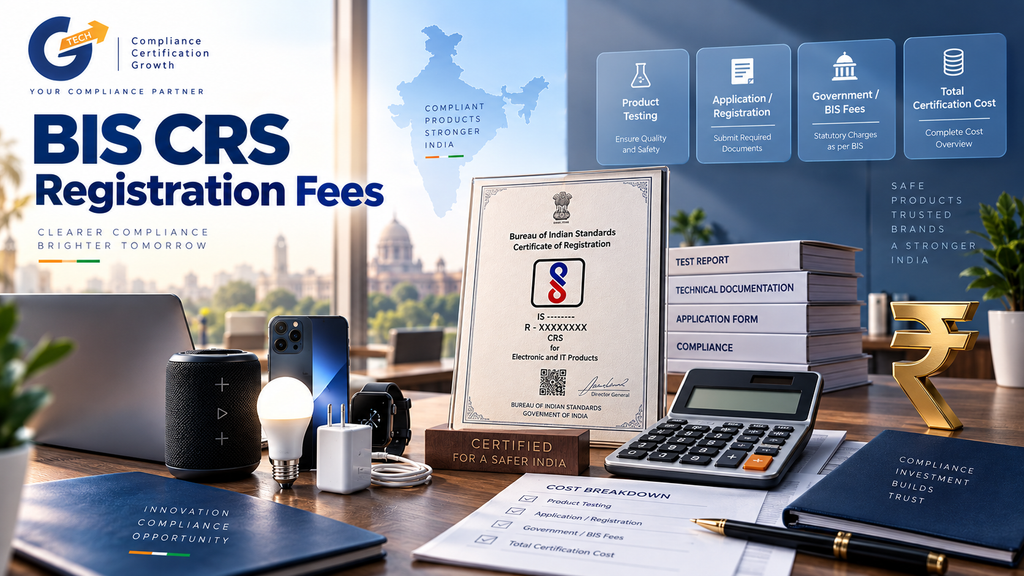
1. Government Registration Fee
BIS charges a fixed statutory fee for each application. This fee is set by BIS and stays the same regardless of which consultant, if any, you work with.
2. Testing Charges
This is usually your biggest cost. It depends on:
- Your product category
- The specific Indian Standard (IS) it’s tested against
- Which lab you choose
Because testing costs vary widely, it’s worth getting quotes from more than one accredited lab before committing.
3. Consultant Fees (Optional)
If you hire a consultant to manage documentation and BIS correspondence, expect a professional fee on top of government charges. This is optional, but it often reduces rejection risk — especially for first-time applicants.
How to Reduce Your Total Cost
- Prepare complete technical documentation before testing begins, so you avoid re-testing
- Choose a lab that’s accredited for your exact product category the first time
- Bundle similar product variants into one testing cycle where BIS rules allow it
FAQs
Q1. Is BIS CRS registration expensive? Government fees are modest. Testing charges are usually the biggest cost, and they vary by product complexity.
Q2. Is there a renewal fee? Yes. Since BIS CRS registration is valid for two years, renewal involves a fresh fee cycle.
Q3. Are testing costs refundable if my application is rejected? No. Testing fees are paid to the lab directly and are generally non-refundable, regardless of the application outcome.
Q4. Does fee vary by product type? Yes. More complex products with stricter testing standards typically cost more to certify than simpler ones.