
BIS CRS Registration is mandatory for most electronic and IT products sold in India. If you skip it, your shipment can get stuck at customs. So, before you import or launch a product, it’s worth understanding exactly how this certification works.
In this guide, you’ll find everything in one place: what BIS CRS Registration means, who needs it, how the process works, and where to go next for deeper detail.
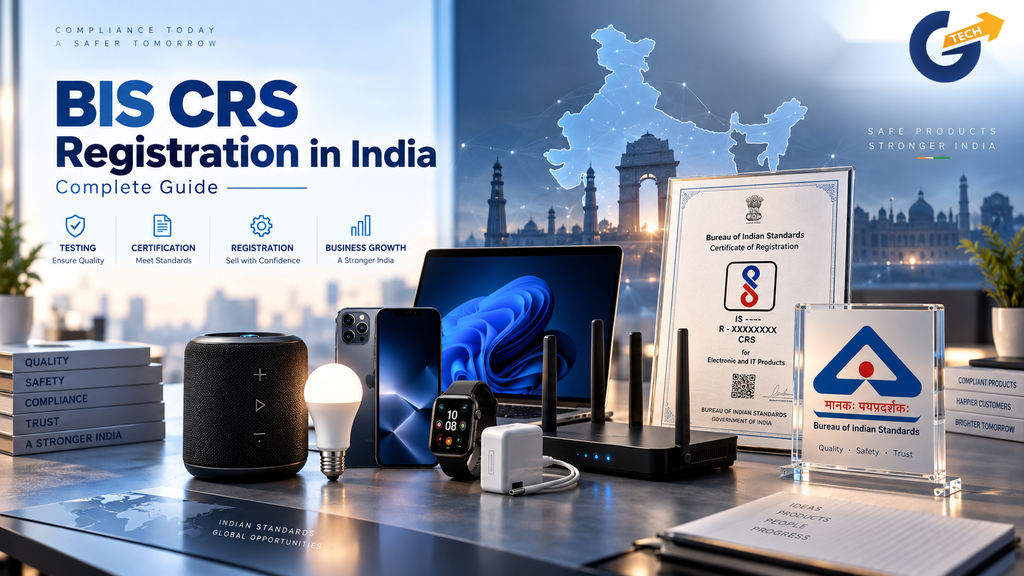
What Is BIS CRS Registration?
BIS CRS stands for Bureau of Indian Standards’ Compulsory Registration Scheme. It’s a mandatory registration process for electronics and IT products notified by the government. In simple terms, it confirms your product meets India’s safety and quality standards before it reaches the market.
Because BIS is the official standards body for India, no product on the notified list can legally be sold without this registration. That’s true whether you manufacture locally or import from abroad.
Why BIS CRS Registration Matters
Here’s the practical reason this matters to you: customs and market surveillance authorities actively check for BIS CRS compliance. So, if your product isn’t registered, it can be seized, held, or fined — even if the product itself is perfectly safe.
In other words, this isn’t just a formality. It’s a legal gate you have to pass through before your product can be sold in India.
Who Needs BIS CRS Registration?
- Importers bringing electronics into India
- Domestic manufacturers of notified electronic products
- Foreign brands entering the Indian market (through an Authorized Indian Representative)
- E-commerce sellers listing electronics on Indian platforms
The Registration Process, in Brief
- Check if your product falls under the BIS-notified list
- Get the product tested at a BIS-recognized lab
- Submit your application with test reports and company documents
- Respond to any BIS queries during review
- Receive your registration number
For the full step-by-step breakdown, see our BIS CRS Registration Process page.
What You’ll Need
Test reports, company documents, and product technical details are the core requirements. Additionally, foreign manufacturers need an Authorized Indian Representative. See our complete Documents Required page for the full checklist.
Cost and Timeline
Government fees are fixed, but total cost depends on testing requirements for your product category. Typically, the process takes a few weeks from testing to certificate issuance. Full details: BIS CRS Fees | Validity & Renewal
Which Products Are Covered?
Not every electronic product needs BIS CRS — only those on the official notified list. Check our BIS CRS Notified Products List to confirm whether your product qualifies.
BIS CRS vs Other Certifications
BIS CRS is often confused with ISI Mark or WPC ETA. However, each covers different things. Our BIS CRS vs ISI Mark comparison explains exactly how they differ, so you don’t end up applying for the wrong certification.
FAQs
Q1. What is BIS CRS Registration? It’s a mandatory Government of India registration confirming that a notified electronic product meets safety and quality standards.
Q2. Is BIS CRS Registration the same as ISI Mark? No. BIS CRS applies to electronics and IT products through lab testing, while ISI Mark applies to categories like electrical and construction goods through factory licensing.
Q3. How long is BIS CRS Registration valid? It’s generally valid for two years, after which renewal is required.
Q4. Do foreign manufacturers need a local representative? Yes — an Authorized Indian Representative (AIR) must file on their behalf.